

AI Integration Services for the Systems You Already Run
We connect AI models to your CRM, website, database and internal tools through their supported APIs, with permissions scoped and every action logged. Integration plan and fixed quote within 48 hours.
- AI that cannot see your data
- Access nobody scoped
- No record of what it did
The model is the easy part. The wiring is the work.
Anyone can open a chat window. Getting an AI model to read your customer records, answer from your own documents and update the right system without breaking anything is an integration job, and it fails for the same reasons integrations always fail: unclear permissions, untested edge cases and nobody owning it after launch.
AI that cannot see your data
A generic model answers generically. Until it can read your product catalog, your policies or your case history, it is a novelty rather than a tool.
Access nobody scoped
Giving a model an admin key to the CRM is fast and dangerous. The integration has to define what it may read, what it may write and when a person signs off.
No record of what it did
When a customer asks why they received that email, someone needs to be able to answer. Without logs, an AI integration is a liability rather than an asset.
What AI integration means for a business your size
AI integration services connect a language model or other AI service to the systems where your work already happens, so the model can read the right context and take defined actions inside them. Invisio Solutions builds that connection for CRMs, websites, ecommerce stores, booking systems and internal databases, through supported APIs rather than screen automation, and keeps the middleware small enough that your own team can operate it.
Answers from your own documents
A retrieval layer over your policies, product data, past projects or knowledge base, so the model answers with your facts and cites where they came from. Users only ever see documents they were already allowed to open.
AI inside the CRM and helpdesk
Drafting, summarizing, tagging and enrichment delivered inside HubSpot, Salesforce, Zendesk, Pipedrive and similar tools, where your team already works, not in a separate window.
AI features in your website or product
Search that understands questions, assistants that book and quote, forms that pre-fill from a photo of a document. Built into the site or app we build or you already have.
Agents that act, within limits
Where the task needs the model to do something, not just say something, each action is allow-listed, run under its own identity and, where the consequence is real, held for human approval.

Permissions, logs and a way back
Every model connection is a new identity in your environment with read access, write access or both. We treat it as one. Before the first call these are agreed in writing:
- Which systems the model may read, down to the object and field
- Which actions it may take on its own, and which wait for a person
- A separate service identity per integration, never a shared admin key
- A log of every read, prompt, response and write, kept where your team can query it
- A test environment with production-shaped data before anything touches live records
- A rollback path so the integration can be switched off in one step
- Where personal data goes, which provider processes it and under what terms
- Evaluation cases that must pass before any prompt or model change ships

The integrations we build most
ChatGPT and Claude integration
OpenAI, Anthropic and Google models wired into your product or process, chosen per task for cost, quality and data handling.
Retrieval (RAG) over your data
Vector search over documents, tickets and databases with source permissions enforced at query time.
CRM and helpdesk AI
Summaries, drafts, lead scoring and routing inside the tools your team lives in.
Website and ecommerce AI
Question-answering search, product finders, quote assistants and content tooling in WordPress, Shopify, Webflow and custom builds.
Document and email processing
Extraction, classification and routing of invoices, applications, contracts and inbound mail.
Middleware and orchestration
The thin layer between model and systems: routing, retries, rate limits, fallbacks and queues, documented so you can run it.
How an integration project runs
A single integration, such as retrieval over one document store or AI drafting in one helpdesk queue, typically ships in four to eight weeks including evaluation. Multi-system agents take longer because the permission design is real engineering.
- 1
Map the systems
We document the data, the APIs, the auth layer and the workflow the AI will attach to, and agree what success looks like in numbers that workflow already reports.
- 2
Scope the access
Read scopes, write scopes and approval points are written down and signed off before a line of integration code exists.
- 3
Build and evaluate
Connectors, retrieval and prompts are built against test data, then measured against a fixed set of real cases until they pass.
- 4
Ship and watch
Staged rollout behind a switch, monitoring for cost, latency and quality drift, and a runbook for your team. We stay on for maintenance if you want us to.

We're probably not the right fit if…
- You need a research team to train a model from scratch
- The systems involved have no API and cannot be changed
- You want the AI to act on customers with no human review at all
- There is no one on your side who can own the integration after launch
- The goal is to say the company uses AI rather than to fix a specific task
- You need on-premise model hosting with no cloud provider involved
Frequently asked questions
The questions we get asked most before a project starts. Can't find what you're looking for?
Ask us directlyAI integration services connect an AI model to the software a business already runs, so the model can read the right data and take defined actions inside those systems. That covers retrieval over internal documents, AI features inside a CRM or website, document processing, and agents that update records under scoped permissions. Invisio Solutions builds the connection, the permissions, the logging and the monitoring, then documents it for your team.
Anything with a supported API: HubSpot, Salesforce, Pipedrive, Zendesk, Shopify, WooCommerce, WordPress, Webflow, Google Workspace, Microsoft 365, Xero, QuickBooks, booking platforms and custom databases. For models we work with OpenAI, Anthropic and Google, chosen per task. If a system has no API we say so at the mapping stage rather than building something fragile on top of it.
Integration gives the model access to your systems and data with the right permissions; automation decides what runs, when and with what approvals. They are often one project. If your question is "how do we stop doing this task by hand", start with our AI automation agency page; if it is "how do we put AI into the tool or site we already have", you are on the right page.
By never giving it the chance. Each integration runs under its own identity with the minimum scopes for the job, its allowed actions are listed explicitly, consequential actions wait for a person, and every call is logged. Prompt and model changes have to pass a fixed evaluation set before they ship.
Not if it is built properly. Model calls run asynchronously or behind caching where the user is waiting, heavy work is queued, and nothing blocks the existing page. We measure response times before and after and treat a regression as a defect.
We quote a fixed price after mapping the systems and scoping the access, so the number covers the whole first integration rather than an hourly estimate that grows. Ongoing model usage is billed by the provider at cost, and maintenance is a separate monthly retainer with no long contract.
Yes, provided it has a maintainable codebase or a platform with an API. We regularly take over sites built by other agencies; the first step is a short audit of what is there. Where a site is not in a state to be extended, we will tell you that and what it would take to fix, rather than integrate on top of it.
Invisio Solutions is based near Guildford in the UK and has worked with US and UK businesses since 2018. All integration work is done by our own in-house developers; nothing is white-labeled or subcontracted.
Related services
Real projects. Real results.
Three projects closest to ai integration services. Each opens the full case study with timeline, scope and the tactics behind the result.
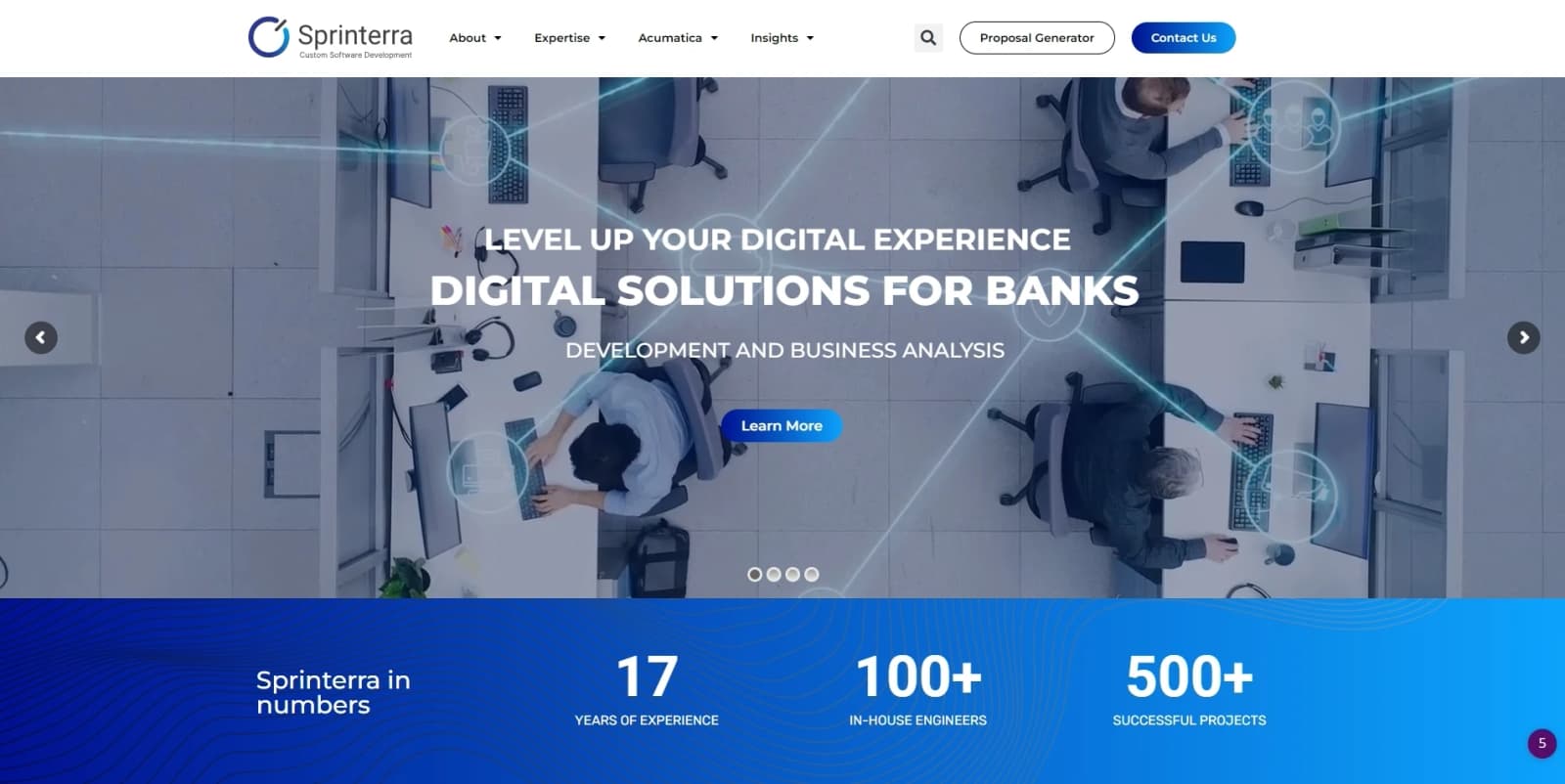
Sprinterra (USA)
A global software development and IT consulting company headquartered in New York, specializing in enterprise software solutions. Recognized among the top software development agencies by Clutch and a trusted Acumatica development partner, Sprinterra helps organizations accelerate digital transformation through custom-built technology.
View case study
Elevate Solutions (USA)
Elevate Real Estate Solutions is a PropTech company that provides all-in-one, cloud-based software solutions for real estate developers, property managers, and construction teams. Built on the Acumatica platform, their system enables businesses to manage the entire property lifecycle—from development and budgeting to leasing, tenant management, and financial reporting—within a single, integrated platform.
View case study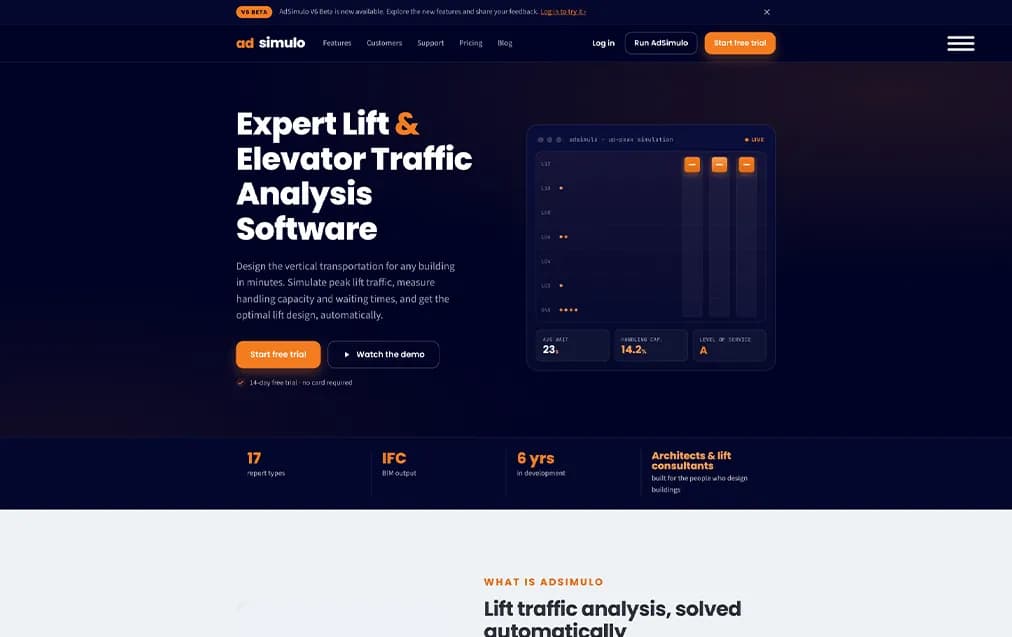
AdSimulo (UK)
Website Development + Digital Marketing & Social Media, Lead Generation, Client Conversion.
View case studyMore on ai integration services
What our clients say
Outcomes, not adjectives. Every quote below is from a real Trustpilot-verified review.
Could your business be next?
Twenty minutes. One free call. No PDF templates.
Let's create something new
Tell us which system the AI needs to read from or write to. We reply with an integration plan, the permissions it needs and a fixed quote.
Prefer to book a call directly?
20-minute discovery call. No prep needed, just bring your URL.
- Available
- Today
- Selected
- Unavailable
Or send us a message
We reply personally, usually within a few hours.