How to Build a Digital Marketing Strategy for Your Business: A Complete Guide
Most businesses do not have a digital marketing strategy. They have a website someone built two years ago, an SEO retainer they are not sure is working, and an ad account a previous employee set up and nobody has touched since. Each piece exists. None of them were built to work together, and the business pays for all three while getting the return of roughly one.
This guide covers what a genuine digital marketing strategy actually involves: the website foundation everything else depends on, how SEO and PPC fit together rather than compete for budget, how to decide between a redesign and a rebuild, what a realistic budget and timeline look like, and the mistakes that quietly undermine a plan that otherwise looks sound on paper.

What is a digital marketing strategy, and why do most businesses not actually have one?
A digital marketing strategy is a coordinated plan connecting your website, your organic visibility, and your paid advertising around the same customer and the same goal, rather than three separate line items managed in isolation. Most businesses have the three pieces. Few have the coordination.
The gap shows up in predictable ways: SEO content that nobody promotes, PPC campaigns sending traffic to a website that was never built to convert it, and a redesign that ignores the keywords the content team spent months targeting. Each decision made sense in isolation. None of them were made with the others in mind, and that is the entire difference between a strategy and a collection of marketing activities.
Step 1: Start with the foundation, your website
Every other part of a digital marketing strategy sends traffic somewhere, and that somewhere is almost always the website. A strategy built on top of a weak foundation underperforms no matter how good the SEO or PPC work layered on top of it is, which is why this is always the right starting point rather than an afterthought.
Choosing the right platform
The platform decision shapes everything that follows. WordPress offers the broadest plugin ecosystem and suits businesses with complex content needs or an existing WordPress-fluent team. Webflow suits marketing-led teams who want direct visual control and fast iteration without relying on a developer for every change. For businesses with requirements neither platform accommodates well, custom website development removes the constraints entirely, at a higher upfront cost. For a store specifically, ecommerce website development introduces its own platform considerations around product catalogue complexity and checkout requirements.

Design and user experience
A technically sound site that is hard to navigate or visually unclear still loses customers. UI/UX design is not decoration layered on at the end. It determines whether a visitor who found you through SEO or PPC actually converts once they arrive, which makes it as central to a digital marketing strategy as the channels driving traffic to the site in the first place.
Step 2: Build organic visibility with SEO
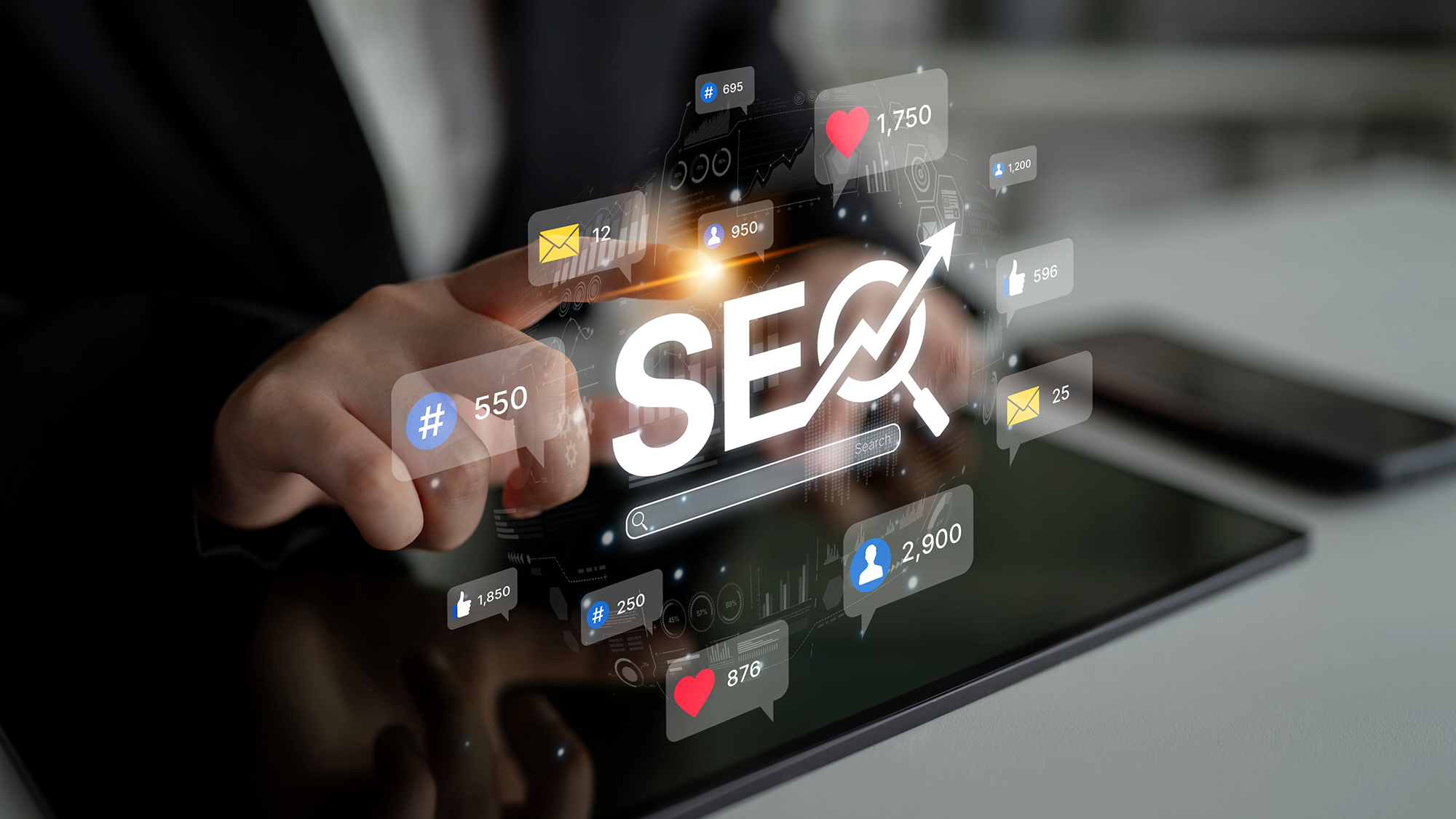
SEO is the slowest-moving piece of a digital marketing strategy and also the one that keeps paying off long after the active work slows down, which is why it belongs in the plan from the start rather than added once budget allows.
Technical SEO
Before content or authority work can matter, search engines need to be able to crawl, render, and index the site properly. Technical SEO covers site speed, crawl errors, structured data, and the underlying architecture that everything else depends on. Skipping this step caps the return on every other SEO investment made afterward.
Content and on-page optimization
Content built around real search intent, not just keyword density, is what actually earns rankings and trust. Every page needs a clear purpose tied to a specific search, with titles, headings, and copy that answer what the person searching actually wants to know.
Link building and authority
Earned, relevant backlinks remain one of the more reliable signals correlating with stronger rankings. Link building done through genuine digital PR and outreach compounds over time, while manufactured links through schemes or paid placements carry real penalty risk and should have no place in a serious strategy.
Industry-specific SEO
Some categories need their own priorities layered on top of general SEO. Dental SEO, for example, weights Google Business Profile completeness and review management far more heavily than a typical business would, since local trust decides most patient decisions. An online store has an entirely different set of priorities, covered under ecommerce SEO, centred on product and category page structure rather than local visibility.
Step 3: Add PPC for immediate, targeted visibility
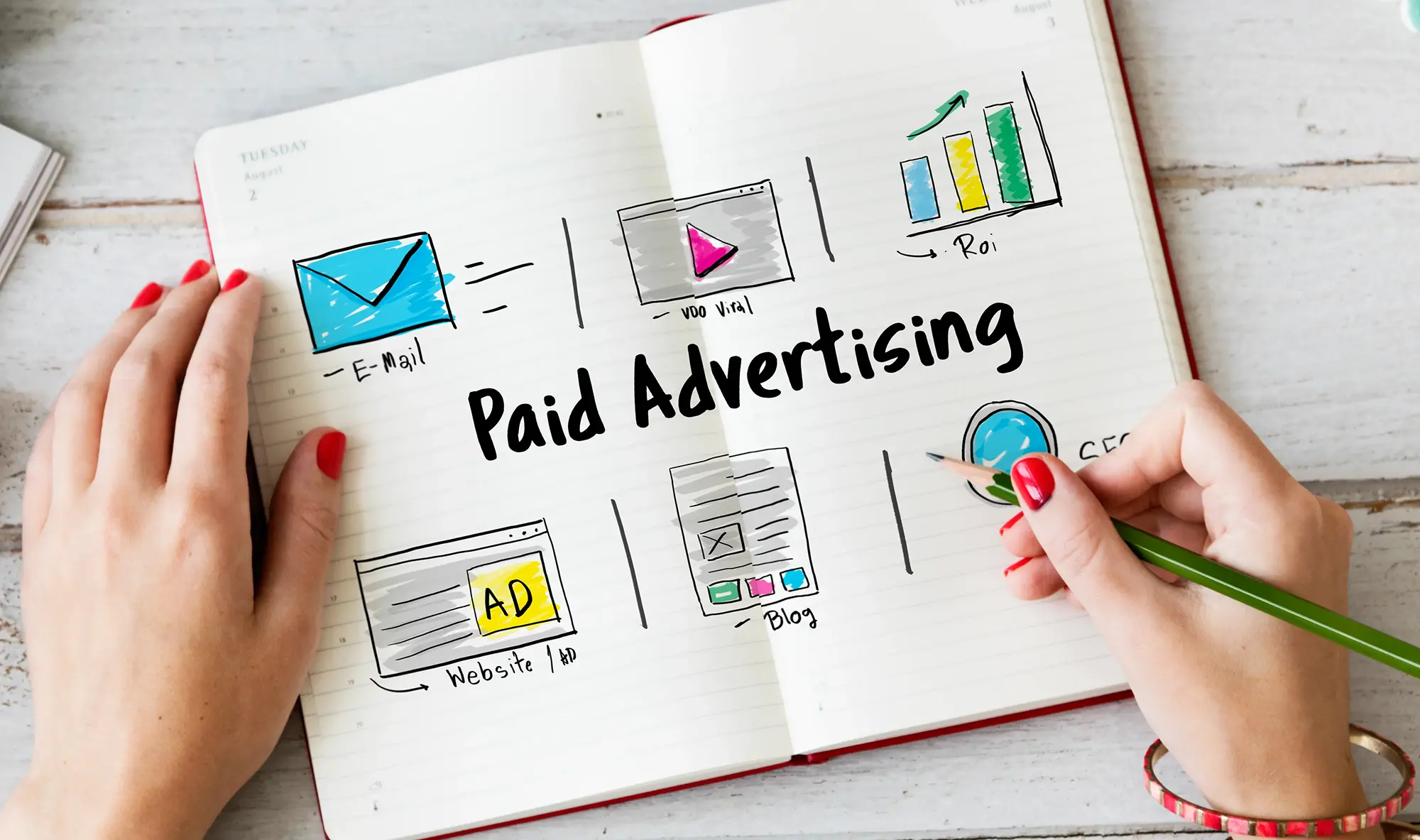
Where SEO compounds slowly, PPC delivers visibility the moment a campaign goes live, which makes it the right tool for demand that needs capturing now rather than in six months. The two channels are rarely a choice between one or the other; they work better run together, with paid campaign data revealing which messages convert, which then sharpens what the SEO content prioritizes next.
Running PPC well requires more than setting a budget and picking keywords. A Google Ads specialist brings the account structure discipline, conversion tracking accuracy, and ongoing optimization that separates an account that spends well from one that simply spends.
Step 4: Decide whether you need a B2B-specific approach
A B2B purchase typically involves multiple stakeholders and a longer, more considered evaluation than a consumer purchase, which changes what a strategy needs to prioritize. Content has to address several different people with different concerns, not a single generic buyer persona, and the channels need to support a research process that can span weeks or months rather than a single visit.
If your customers are other businesses, building this into the strategy from the start through a dedicated B2B digital marketing approach avoids the common mistake of applying consumer-style tactics to a fundamentally different buying process.
Step 5: Know when to redesign vs rebuild vs start fresh
Not every weak website needs to be rebuilt from scratch. If the technical foundation is sound but the design and messaging are outdated, a website redesign is usually faster and cheaper than starting over, and it preserves the SEO equity already built into existing pages.
A full rebuild makes more sense when the technical foundation itself is the problem, when the platform can no longer support what the business needs, or when the existing structure is too tangled to improve incrementally. Getting this decision right avoids both the waste of rebuilding something that only needed updating and the frustration of patching something that genuinely needed replacing.
How do these pieces actually work together?
This coordination is not just a nice-to-have. Content Marketing Institute’s 2026 B2B research found that the marketing teams seeing the strongest results were not the ones with the most tools, but the ones treating strategy as the foundation tools get layered on top of, concluding plainly that tools do not create strategy, they amplify it.
That is the practical argument for everything in this guide. A fast website with no SEO behind it has nothing to rank. SEO with no website built to convert wastes the traffic it earns. PPC pointed at a page that does not match the ad wastes the budget spent winning the click. None of these channels fail in isolation nearly as often as they fail from never being connected to each other.
How much should a business budget for a digital marketing strategy?
Budget depends entirely on scope, competitiveness, and the current state of the website, so there is no single figure that applies universally. What matters more than the headline number is getting a scoped quote from two or three providers for your specific situation, which produces a realistic range grounded in your actual market rather than a generic benchmark.
A sensible starting point is deciding the outcome you want, then working backward to what achieving it actually requires across the website, SEO, and PPC, rather than picking an arbitrary monthly figure and trying to make it stretch across all three.

How long does it take to see results?
Website and PPC improvements can show results within weeks of launch, since both are largely under direct control once live. SEO moves slower by nature, with most businesses seeing meaningful organic movement within three to six months and stronger compounding results from six months onward as content and authority work mature.
A coordinated strategy tends to show visible progress faster than running the channels separately, simply because each one is reinforcing the others rather than working in isolation while the business waits for any single channel to prove itself alone.
The most common mistakes that undermine an otherwise good strategy
Building channels in isolation. SEO, PPC, and the website planned by different people on different timelines rarely add up to more than the sum of their parts.
Skipping the technical foundation. Content and advertising built on top of a slow or poorly structured site underperform no matter how good the work itself is.
Abandoning SEO before it compounds. Pulling budget from organic work after three months, right before the investment would have started paying off, is one of the most common and costly mistakes.
No shared measurement. Judging each channel by its own isolated metrics, rather than pipeline and revenue across the combined system, hides which channels are actually driving results.
Treating the website as finished at launch. A site that performed well a year ago can quietly fall behind as content ages and technical debt accumulates without ongoing attention.
Build a digital marketing strategy that actually works as one system
A genuine digital marketing strategy connects the website, SEO, and PPC around the same customer and the same goal, rather than treating them as three separate services competing for the same budget.
Invisio Solutions builds and runs digital marketing strategies around exactly this coordination. Visit the Invisio Solutions homepage to discuss your business and request a tailored proposal.
Frequently asked questions
- A complete digital marketing strategy typically includes the website foundation, SEO (technical, content, and link building), and PPC advertising, coordinated around the same customer and goal rather than managed as separate, disconnected services.