If you are investing in marketing but still not seeing steady growth, you are not alone.
Many businesses run Google Ads without fixing their website. Others invest in SEO but ignore conversion design. Some redesign their site but never build traffic. The result is wasted budget, inconsistent leads, and frustration.
A strong Digital marketing strategy is not about choosing between SEO, PPC, or web design. It is about combining them into one system. When these channels work together, performance improves faster and becomes more predictable.
After working with service-based and eCommerce businesses across the USA, UK, and Europe, one pattern is clear. Companies that integrate search engine optimization, paid advertising, and website development outperform those that treat them as separate projects.
Let’s break down why.
Search engine optimization can drive qualified organic traffic. But if your landing pages are slow, unclear, or poorly structured, visitors leave.
Ranking on page one means little if your bounce rate is high and your conversion rate is low. Technical SEO, content strategy, and keyword research must connect to user experience and conversion rate optimization.
Pay-per-click advertising can generate leads quickly. Google Ads and paid search campaigns are powerful tools. But relying only on PPC keeps your cost per acquisition high over time.
Without SEO, you pay for every click forever. Without landing page optimization, your quality score drops and cost per click rises.
A modern website is essential. But design alone does not generate visibility.
If your site is not structured for search engines, optimized for relevant keywords, and supported by content marketing, it will not attract consistent inbound traffic.
Each channel has value. None of them work at full strength alone.
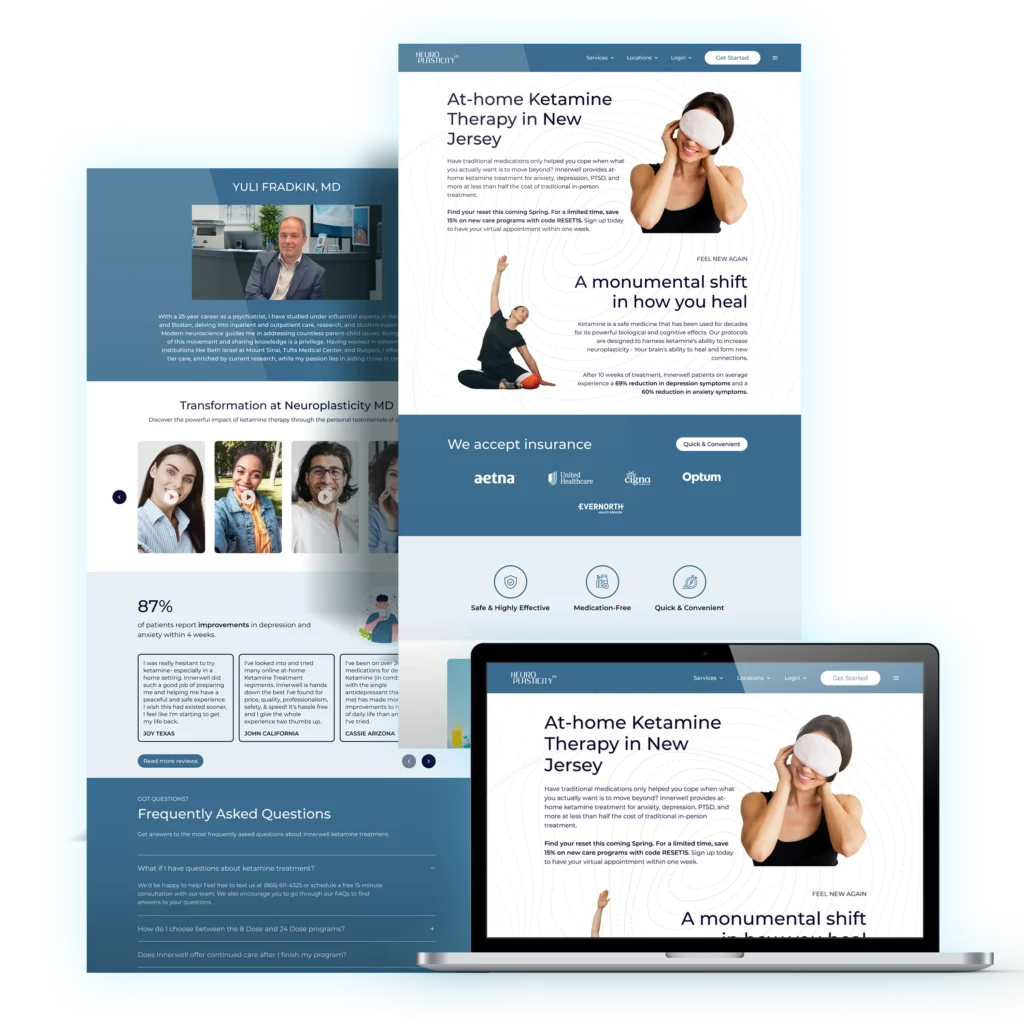
A connected Digital marketing strategy creates leverage. Each channel supports the others.
Here is how it works in practice.
Search engine optimization increases organic rankings for high-intent keywords. When your site ranks for commercial search terms, you reduce reliance on paid ads.
Strong on-page SEO, internal linking, schema markup, and technical optimization improve crawlability and user experience. Over time, this lowers acquisition cost.
Paid advertising fills the gap while SEO builds authority.
Google Ads campaigns reveal which keywords convert. You can test headlines, landing pages, and offers quickly. That data feeds your organic content strategy.
PPC also captures bottom-of-funnel search intent while SEO content expands your reach at the top and middle of the funnel.
Traffic without conversion is wasted effort.
Conversion-focused web design improves page speed, mobile responsiveness, call-to-action clarity, and user flow. Heatmaps, analytics, and A/B testing refine performance.
A well-built website supports both organic search rankings and paid advertising campaigns. It improves engagement metrics like time on page and reduces bounce rate.
When SEO brings traffic and PPC accelerates visibility, your website must convert that traffic into enquiries and sales.
Businesses that combine SEO, PPC, and website optimization often experience faster growth because of compounding results.
This is not theory. It shows up clearly in analytics dashboards.
For example, when technical SEO improves page load speed, Google Ads quality score improves. When PPC testing identifies high-converting keywords, SEO content can target them more strategically.
This alignment creates measurable performance gains.
Companies working with agencies like Invisio Solutions often see this integration in action because campaigns are managed under one strategic framework rather than across disconnected vendors.
You can review integrated service approaches on this website to understand how alignment across SEO, paid media, and development works in practice.
A real Digital marketing strategy should follow a structured framework. Not random tactics.
Start with a technical SEO audit and website performance review. Assess:
Without clean data, decision-making is flawed.
Use keyword research tools to find commercial and transactional terms. Group them by intent.
Build landing pages around core services. Support them with content marketing that answers informational queries.
While SEO builds, launch targeted paid campaigns for your highest-converting services.
Use structured ad groups, clear call extensions, and optimized landing pages. Track cost per conversion carefully.
Install heatmaps. Monitor analytics. Test different headlines and CTAs.
Even a small increase in conversion rate dramatically improves ROI across both organic and paid channels.
Every 60 to 90 days, review performance.
Which keywords drive revenue?
Which pages convert best?
Where are users dropping off?
This feedback loop strengthens the entire system.
Many business owners unintentionally slow their own growth.
A connected strategy avoids these issues.
SEO, PPC management, and web development must operate as one engine.
Markets in the USA, UK, and Europe are competitive. Cost per click in industries like legal, finance, SaaS, and healthcare can be high.
Without organic visibility, ad budgets escalate. Without strong UX design, traffic leaks.
A structured Digital marketing strategy reduces volatility. It creates diversified traffic sources and a consistent lead flow.
Search algorithms change. Ad costs fluctuate. But businesses with integrated systems adapt faster because their data and messaging are aligned.
Businesses that treat SEO, PPC, and web design as separate activities often struggle with inconsistent growth.
A connected digital marketing strategy builds authority, drives qualified traffic, and converts that traffic into measurable revenue. It reduces wasted spend and improves long-term stability.
If your marketing efforts feel fragmented or underperforming, reviewing how these channels align could reveal clear opportunities for improvement. A strategic consultation can help identify gaps and outline a more integrated growth plan without unnecessary complexity.


What Our Clients Say
Get In Touch
You can reach us anytime via [email protected]
+44 (0) 7446508866 [email protected] [email protected]
2a Killieser Avenue, London United Kingdom, SW2 4NT
SEO typically takes three to six months to show measurable ranking improvements, depending on competition and domain authority. PPC campaigns can generate leads within weeks if set up correctly. The key is integration. Paid search delivers immediate traffic while organic rankings build authority. Website optimization improves conversion rate from day one. Businesses that combine these efforts usually see more stable growth compared to those relying on one channel. Tracking key metrics such as cost per acquisition, organic impressions, and conversion rate gives a clearer timeline for return on investment.
It depends on your goals and budget. PPC offers quick visibility for high-intent keywords, which is useful if you need immediate leads. SEO builds long-term organic traffic and reduces dependency on paid ads. In competitive industries, combining both often produces stronger results. PPC data helps refine keyword targeting for organic content. Meanwhile, SEO strengthens brand authority and lowers overall acquisition cost. A phased approach where both channels support each other usually outperforms a single-channel strategy.
Yes. Page speed, mobile responsiveness, site structure, and internal linking directly affect search engine rankings. Google considers user experience metrics when ranking pages. For paid advertising, landing page quality influences quality score, which impacts cost per click. A poorly designed website reduces conversion rate and increases acquisition costs. Clean design, strong call-to-action placement, and optimized content improve both organic and paid outcomes.
Success is measured through combined performance metrics. Organic traffic growth, keyword rankings, cost per conversion, return on ad spend, and overall revenue trends all matter. Conversion rate optimization metrics such as bounce rate and time on page also provide insight. The goal is not just traffic, but profitable traffic. An integrated dashboard that tracks SEO, PPC, and website performance together gives a full picture of progress.
Yes. Smaller businesses often benefit even more because budgets must work efficiently. PPC can target local or niche keywords with precision. SEO builds long-term credibility within that niche. Even modest improvements in conversion rate can significantly impact revenue for small companies. When strategy is aligned, marketing spend becomes more predictable and scalable.
Technical SEO supports site structure, crawlability, and page performance. When landing pages are optimized technically, they load faster and provide better user experience. This can improve Google Ads quality score, lowering cost per click. Clean URL structure and structured data also improve visibility in search results. Technical health strengthens both organic and paid performance.
We use cookies to improve your experience on our site. By using our site, you consent to cookies.
Manage your cookie preferences below:
Essential cookies enable basic functions and are necessary for the proper function of the website.
You can find more information in our Cookie Policy and .