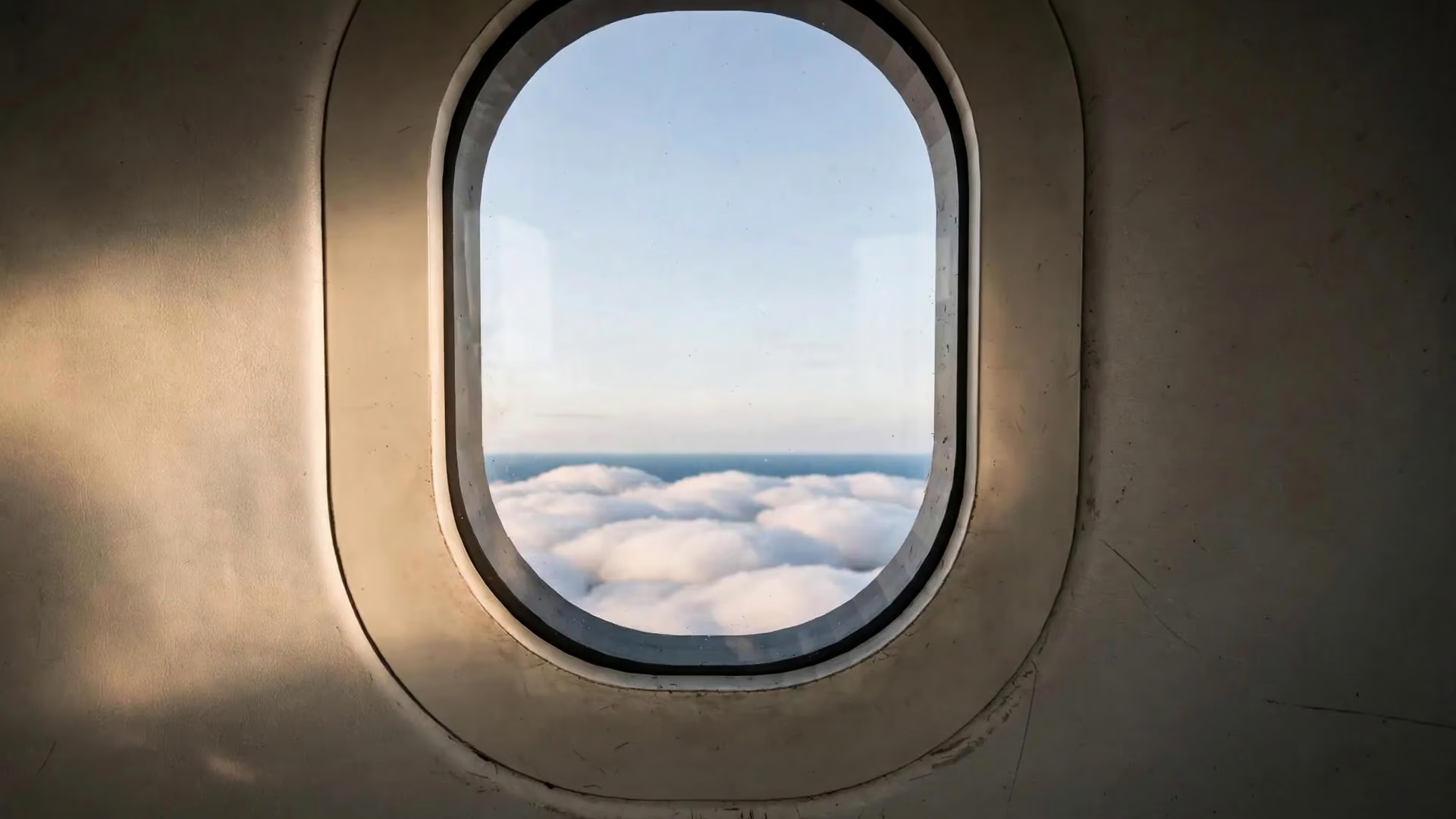
We land on the beach.
Eight seats from Oban to the Outer Isles, whenever the sea lets us.
- Next landing
- --:--
- Low water
- --:--
Forty minutes out of Oban,
the sea goes this colour.
Then down through the cloud.
Our timetable is a tide table.
The strand at Hallasay is the runway, and twice a day it is under the Atlantic. So we fly around low water, which arrives a little under an hour later every day. Nobody here checks a departures board. They check the tide.
This week at Hallasay Sands
Sample tides, worked out in your browser for this concept. Do not navigate by them.
| Day | Low water | High water | Beach open | We land |
|---|
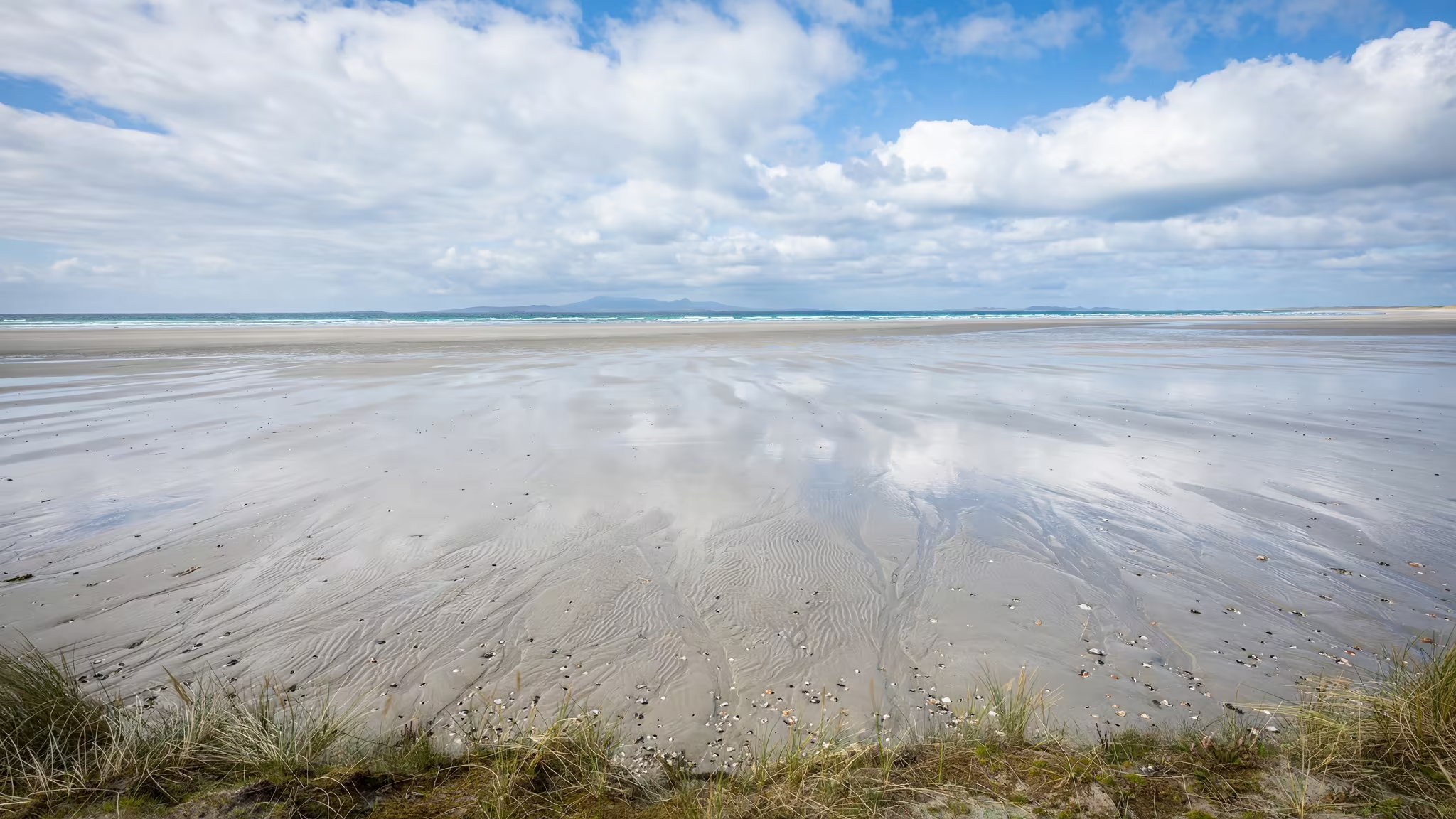
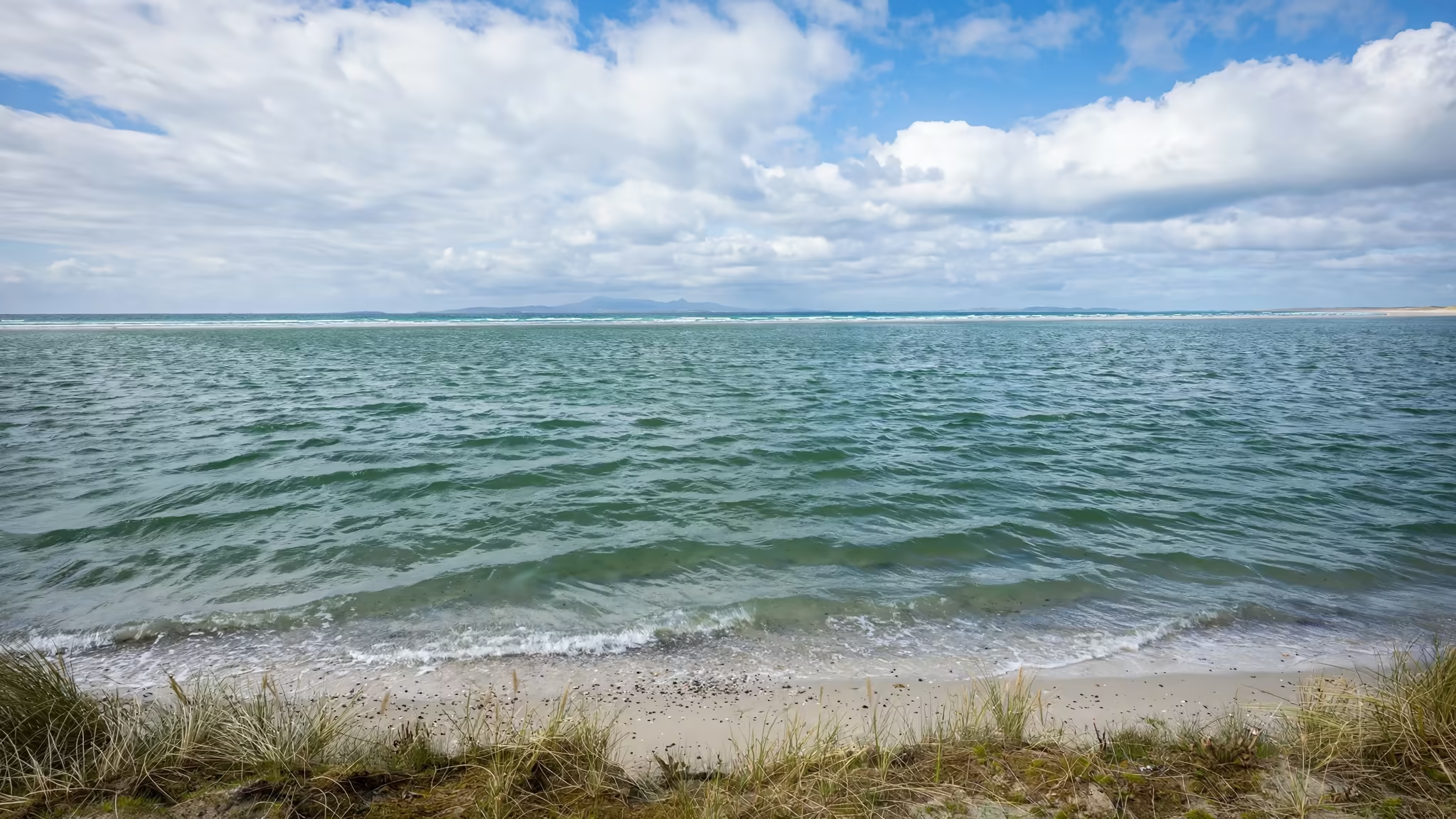
Flood the runway.
0.6metres of tide
1,250metres of firm sand
Beach open
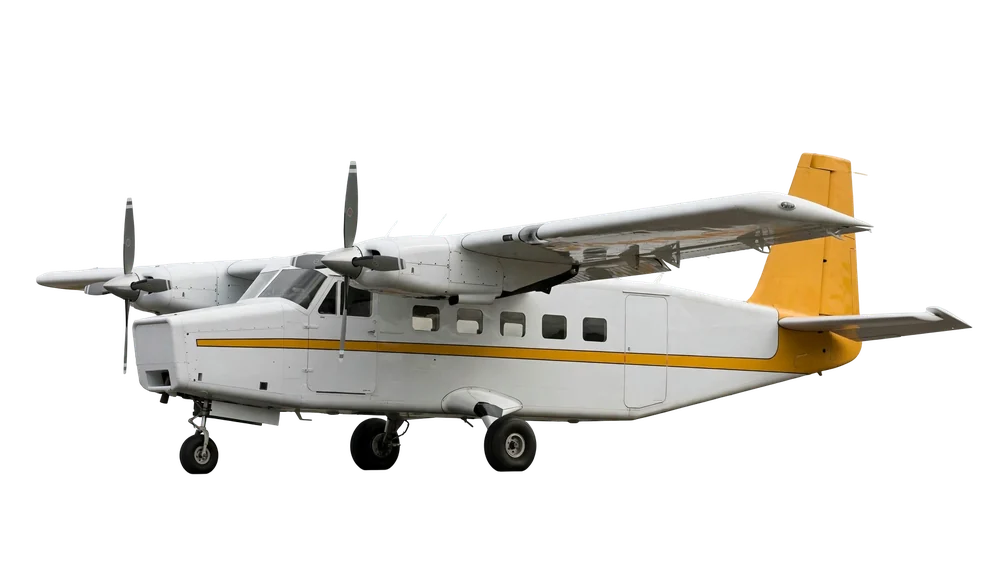
Two small twins that do not mind sand.
- 8
- seats, and every one is a window seat
- 15 kg
- of bags each, weighed with you on the scales
- 1
- dog per flight rides free, on a lap or on the floor
Nobody allocates seats. Sit on the left going in and you get the strand all the way down.
From Oban
- Hallasay Sands40 minthe beach, tide permittingfrom £68
- Uinsay55 mingrass strip, any tidefrom £74
- Orasay Strand1 h 05the other beach, smaller and windierfrom £82
Pick a tide, hold a seat.
Choose a day and we will show you which landings the sea allows on it.
Asked at the ticket hut
What if the weather turns?
We wait on the sand for up to an hour, then put you on the next tide at no charge.
Is landing on a beach rough?
Wet sand is smoother than most tarmac. You will feel the spray before you feel the wheels.
Where is the terminal?
A hut with a kettle at the top of the dunes. Your bags come up in a Land Rover.
Why do flight times change every day?
Because the moon does. Low water moves on by about fifty minutes a day, and we move with it.